The store will not work correctly when cookies are disabled.
We use cookies to make your experience better.To comply with the new e-Privacy directive, we need to ask for your consent to set the cookies. Learn more.
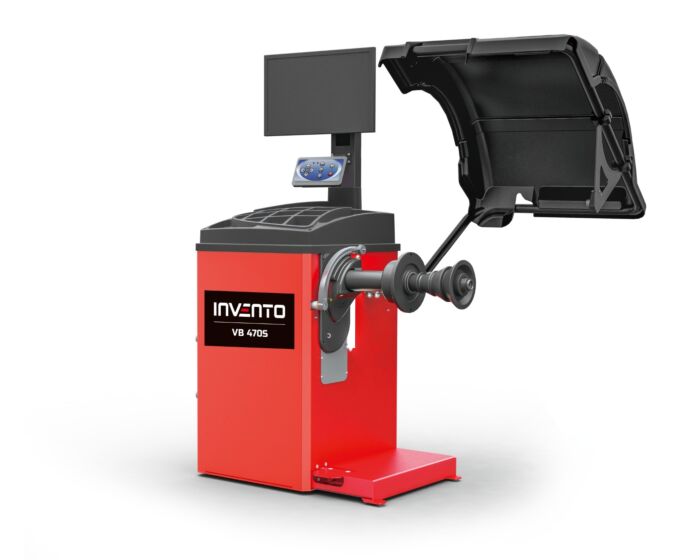
The Invento VB 470S is a fully automatic wheel balancing machine designed for passenger cars and light commercial vehicles.
Details
Technical data
Accessories
Spare Parts
Warranty
Safety
Details
INVENTO VB 470S – Wheel Balancer for Passenger Cars with Brake, LCD Monitor and 3D Sonar
The Invento VB 470S is a fully automatic wheel balancing machine designed for passenger cars and light commercial vehicles.
This model is equipped with an automatic measuring arm for quick input of distance and diameter, as well as a 3D sonar for wheel width detection. A large 19-inch LCD monitor provides clear visibility and comfort during operation. The foot brake allows precise wheel positioning when applying weights. LED lighting and a laser pointer improve accuracy and efficiency in daily tasks.
Key Features
Automatic Measurement of Wheel Parameters Integrated measuring arms quickly determine all necessary parameters (distance, diameter, width), significantly reducing setup time.
19” LCD Display A widescreen monitor ensures convenient and clear operation.
3D Sonar Technology The combination of a measuring arm and sonar allows fast and easy input of all wheel data.
LED Illumination Brightly lights the wheel area when working in dim conditions.
Laser Pointer Accurately indicates the 6 o'clock position for weight placement.
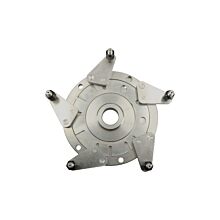
HAWEKA Clamping System Includes a mechanical wheel clamping system by HAWEKA as standard.
Foot Brake & Imbalance Positioning Holds the wheel in the correct position for precise weight application.
5 Alu Programs + 2 Easy Alu Programs A wide range of programs allows for flexible and accurate weight placement options.
Hidden Weight Program Splits adhesive weights for discreet placement behind the spokes.
Motorcycle Wheel Balancing Program Allows motorcycle wheels to be balanced (additional accessories required, e.g., Pro Bike III holder).
40 mm Shaft Diameter Universal shaft size compatible with various accessories.
TIPTOPOL SP. Z O.O. ul. Kostrzyńska 33 62-010 Pobiedziska Poland sklep@tiptopol.pl +48618152200
Electrical risks
The product is powered by electricity and a variety of electrical hazards may occur during operation, which can lead to serious consequences.
Short circuit: This can lead to power outages, damage to equipment, and fire hazards.
Explosions andfires: Improper use of electrical products, such as the use of improper or no safety features, can lead to sparks that start fires. They can cause damage to property and a threat to life and health.
Electric shock: This can lead to personal injury and, in extreme cases, death.
Insulation defects: Poorly insulated wires can lead to an uncontrolled flow of current that can pose a risk to users. This can lead to electric shock, damage to equipment and fires.
Poor grounding: Lack or improper grounding of electrical appliances can cause a buildup of electrical charge. Doing so may lead to electric shock and damage to appliances.
To minimize these risks, it is recommended that the equipment be installed by authorized persons, that electrical installations are regularly inspected, that appropriate safeguards are in place, and that the manufacturer's recommendations for the safe use of the equipment are followed.
Mechanical risks
The product has movable parts that can cause a variety of mechanical hazards during operation, which can lead to serious injuries.
Crushing and crushing: There is a risk that the moving parts of the product will crush or crush the body. It can lead to serious injury or permanent injury.
Cuts and punctures: Cuts, cuts, and even deeper injuries can occur if the user comes into contact with sharp edges or product components.
Impact and Fall Injuries: These can occur when objects fall over and fall from a height or are moved in an improper and dangerous manner. This can cause serious injuries, including broken bones and head injuries.
Trapping: If a body part becomes trapped between moving parts, it can lead to serious injury and loss of limbs.
Vibration: Exposure to prolonged vibration while using the device can damage muscles and nerves. This can lead to vibration syndrome, causing pain and dysfunction in the limbs.
To minimise these risks, it is recommended to use appropriate personal protective equipment, regularly inspect and maintain the equipment, and follow all manufacturer's recommendations for safe use and health and safety (Occupational Health and Safety) regulations.
Thermal risks
When working with heat-generating equipment, a variety of thermal hazards can occur, which can lead to serious consequences.
Burns: Contact with hot surfaces or materials can lead to skin burns. This can cause pain, skin damage, and in more serious cases, require medical treatment.
Fires: Heat-generating appliances can start fires if they are misused or overheated. Fires can cause property damage, personal injury and life-threatening conditions.
Overheating of appliances: Appliances can become overheated as a result of prolonged use or improper ventilation. This can lead to damage to the equipment and also pose a fire hazard.
Explosions and explosions: Heat-generating devices can cause explosions, particularly if they are working with flammable or pressurized substances. This can lead to extensive damage and danger to life and health.
Loss of equipment smoothness: Heat-generating devices can operate less efficiently when exposed to excessive heat. This can lead to equipment failure and the need to repair or replace them.
To minimize thermal risks, it is recommended to read the device's user manual, information on the packaging and in the safety data sheets, regular inspection and maintenance of the equipment, the use of appropriate personal protective equipment, and compliance with the manufacturer's recommendations for the safe use of heat-generating equipment.
Ergonomic risks
When working with heavy objects and in situations requiring prolonged use of force, a variety of ergonomic hazards can occur, which can lead to serious health consequences.
Muscle and joint overload: Muscle and joint overload can occur when lifting, carrying, or handling heavy objects. It can lead to pain, muscle tears and strains, joint injuries, and even structural damage to the body.
Poor posture at work: Working in the wrong posture, such as a hunched posture or twisted posture, can lead to tension in the muscles and spine. This can cause chronic back, neck and shoulder pain and back problems.
Prolonged use of force: Prolonged performance of activities that require a lot of physical effort can lead to fatigue and overloading the body. This can lead to exhaustion, muscle injuries and reduced work efficiency.
Prolonged vibration: Prolonged exposure to vibration, especially with the use of power tools, can lead to nerve and muscle damage. This can cause vibration syndrome, manifested by pain, numbness and loss of sensation in the limbs.
Monotony and repetitive movements: Performing the same movements for a long time can lead to micro-injuries and overloads. This can lead to injuries such as carpal tunnel syndrome, tendonitis and other musculoskeletal conditions.
To minimize ergonomic risks, it is recommended to use appropriate lifting techniques, ergonomic tools and workstations, and regular breaks and stretching exercises.
Environmental risks
A variety of environmental hazards can occur during the use and disposal of products, which can lead to serious consequences.
Environmental pollution: Products, especially those containing chemicals or plastic, can contribute to soil, water, and air pollution. This can lead to the degradation of ecosystems, groundwater and surface water pollution, and negative impacts on human and animal health.
Improper disposal of products: Improper waste management can lead to the uncontrolled spread of toxins and contaminants. This can result in severe environmental pollution, risks to public health, and the loss of valuable natural resources through a lack of recycling.
Electronic waste (e-waste): Electronic products, when not properly disposed of, can become a source of e-waste containing harmful chemicals and heavy metals. This can lead to soil and water contamination, as well as pose a risk to human and animal health.
To minimise environmental risks, it is recommended to manage waste appropriately, including segregation and compliance with environmental regulations.